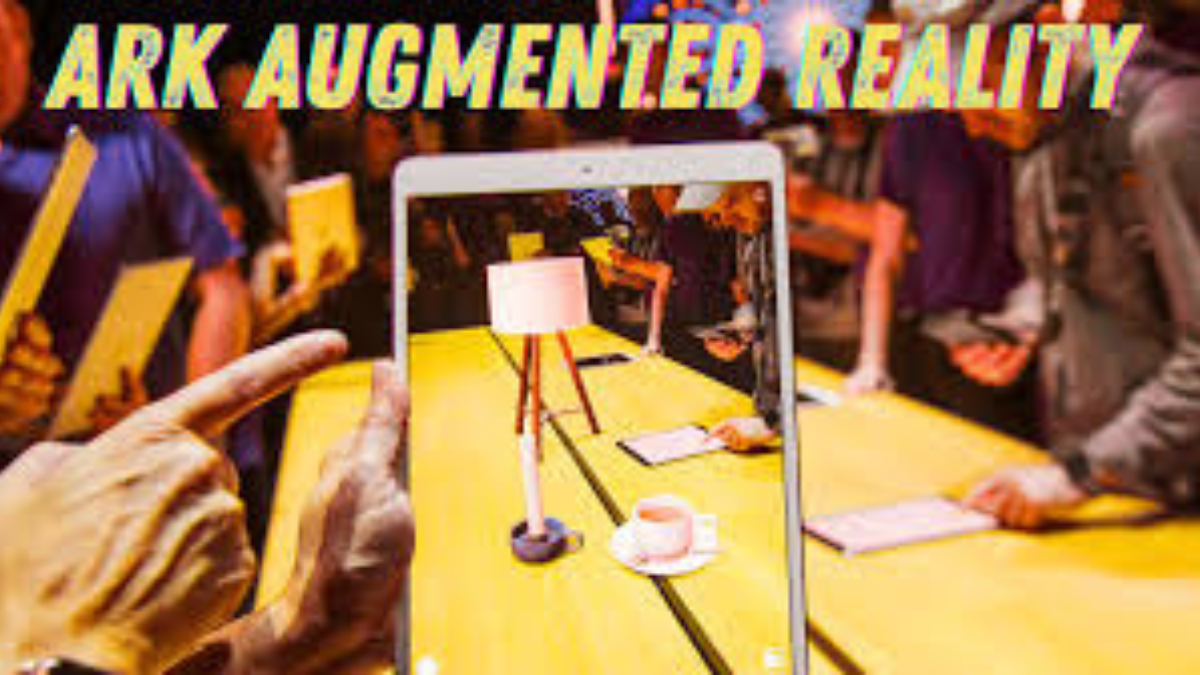
Ark Augmented Reality: Features, Applications, and Future Potential
Ark Augmented Reality is revolutionizing the way we experience the digital and physical worlds simultaneously. By combining advanced AI with immersive AR technology, Ark Augmented Reality allows users to interact with digital objects in real-world environments. This technology is transforming multiple industries, including education, gaming, healthcare, and retail, by offering experiences that are not only interactive but also contextually intelligent. The use of AI enhances the ability of Ark Augmented Reality to generate dynamic, responsive environments, setting it apart from traditional augmented reality platforms.
Unlike conventional AR systems, Ark Augmented Reality integrates knowledge-driven interactions, which means that digital objects behave intelligently within a scene. For instance, in a learning application, virtual objects can respond to user actions, provide guidance, or offer real-time feedback. This makes Ark Augmented Reality not only a tool for entertainment but also a powerful medium for education, professional training, and collaborative work. Its ability to create immersive experiences is redefining what augmented reality can achieve in both personal and professional contexts.
Understanding Ark Augmented Reality
Ark Augmented Reality is a sophisticated platform designed to overlay virtual content onto the real world while leveraging AI to enhance interaction. By combining spatial mapping, computer vision, and machine learning, Ark Augmented Reality allows users to explore highly interactive environments. This approach goes beyond simple visual overlays and creates experiences where digital objects can interact with the user and the physical surroundings intelligently. Such contextual intelligence is what makes Ark Augmented Reality a standout in the augmented reality space.
The platform is capable of generating realistic 2D and 3D scenes on the fly, allowing users to visualize complex environments and concepts with ease. For example, in a design application, architects can project a virtual model of a building onto a real-world site, enabling clients and stakeholders to interact with the design in real time. Ark Augmented Reality provides a more natural and intuitive way to engage with digital content, making it ideal for both personal entertainment and professional applications.
Key Features of Ark Augmented Reality
One of the key features of Ark Augmented Reality is its ability to create highly immersive 2D and 3D environments. These environments are not static; they respond to user actions and adapt to changes in the physical world. By integrating AI with real-time spatial data, Ark Augmented Reality allows digital objects to move, interact, and respond naturally within a scene. This feature is particularly useful for gaming, simulations, and educational applications, where user interaction is a critical part of the experience.
Another notable feature is its compatibility across multiple devices and platforms. Ark Augmented Reality can be used with AR glasses, smartphones, tablets, and other AR-enabled devices. Its integration with popular development frameworks like ARKit ensures that both casual users and professional developers can harness its full potential. Additionally, Ark Augmented Reality supports real-time environmental mapping, allowing virtual objects to interact seamlessly with physical spaces, creating experiences that feel natural and engaging.
Applications of Ark Augmented Reality
In education, Ark Augmented Reality is opening new possibilities for interactive learning. Students can explore virtual laboratories, participate in simulated experiments, or visualize abstract concepts in 3D, making learning more engaging and effective. Teachers and trainers can use Ark Augmented Reality to deliver lessons that adapt to the needs of individual students, providing personalized learning experiences. This level of interactivity and immersion is difficult to achieve with traditional teaching methods and offers significant benefits for both instructors and learners.
In the entertainment industry, Ark Augmented Reality enables developers to create interactive storytelling and mixed reality games that merge the virtual and physical worlds. Users can step into immersive narratives where digital elements respond to their actions in real time. Similarly, industries like healthcare and retail are leveraging Ark Augmented Reality to enhance training, improve patient education, and create virtual product demonstrations. These applications demonstrate the versatility of Ark Augmented Reality across diverse sectors.
Advantages and Benefits of Ark Augmented Reality
One of the major advantages of Ark Augmented Reality is its ability to increase engagement and interaction. By offering immersive, responsive environments, users are more likely to remain engaged with content for longer periods. Businesses can use this technology to provide interactive training, showcase products in innovative ways, and facilitate remote collaboration. The ability of Ark Augmented Reality to combine visual immersion with knowledge-driven AI interaction enhances the overall user experience and drives better results.
Another key benefit is its ability to bridge the gap between physical and digital experiences. Users can interact with virtual objects in their real environment, making education, gaming, and professional collaboration more natural and effective. Ark Augmented Reality enables organizations to adopt forward-looking digital strategies that enhance productivity, engagement, and innovation. Its versatility and future-proof design make it a valuable tool for businesses looking to harness the potential of immersive technology.
Challenges and Limitations
Despite its many advantages, Ark Augmented Reality faces certain challenges. High-performance hardware is often required to run advanced AR applications smoothly, which can be a barrier for casual users and smaller organizations. Additionally, the development of Ark Augmented Reality applications can be complex, requiring expertise in AI, 3D modeling, and AR programming. These factors can increase the cost and time needed to create high-quality AR experiences.
User adaptation is another challenge. While tech-savvy users can navigate immersive environments with ease, new users may require guidance to fully understand and utilize the platform. Moreover, widespread adoption is still limited by the availability of AR-compatible devices and the general familiarity of the public with advanced AR experiences. Overcoming these challenges will be key to the long-term success of Ark Augmented Reality.
The Future of Ark Augmented Reality
The future of Ark Augmented Reality is promising, with advances in AI, machine learning, and AR hardware driving continued growth. As devices become more affordable and powerful, Ark Augmented Reality is expected to see broader adoption across education, entertainment, business, and healthcare. Its ability to create intelligent, interactive environments positions it as a leader in the next generation of augmented reality experiences.
Future innovations in Ark Augmented Reality may include enhanced AI-driven scene generation, improved real-time environmental interaction, and cloud-based AR experiences. These developments will expand the technology’s capabilities, enabling even more complex and immersive applications. As industries continue to embrace AR for training, collaboration, and engagement, Ark Augmented Reality will play a pivotal role in shaping the digital future.
Conclusion
Ark Augmented Reality is redefining how users interact with digital content, offering features, applications, and possibilities that go beyond conventional augmented reality. Its combination of AI-driven intelligence and immersive visual environments makes it a versatile tool for education, entertainment, healthcare, and enterprise solutions. By bridging the physical and digital worlds, Ark Augmented Reality is set to become a core technology in the evolving landscape of interactive experiences. The future of AR looks brighter and more interactive thanks to platforms like Ark Augmented Reality.