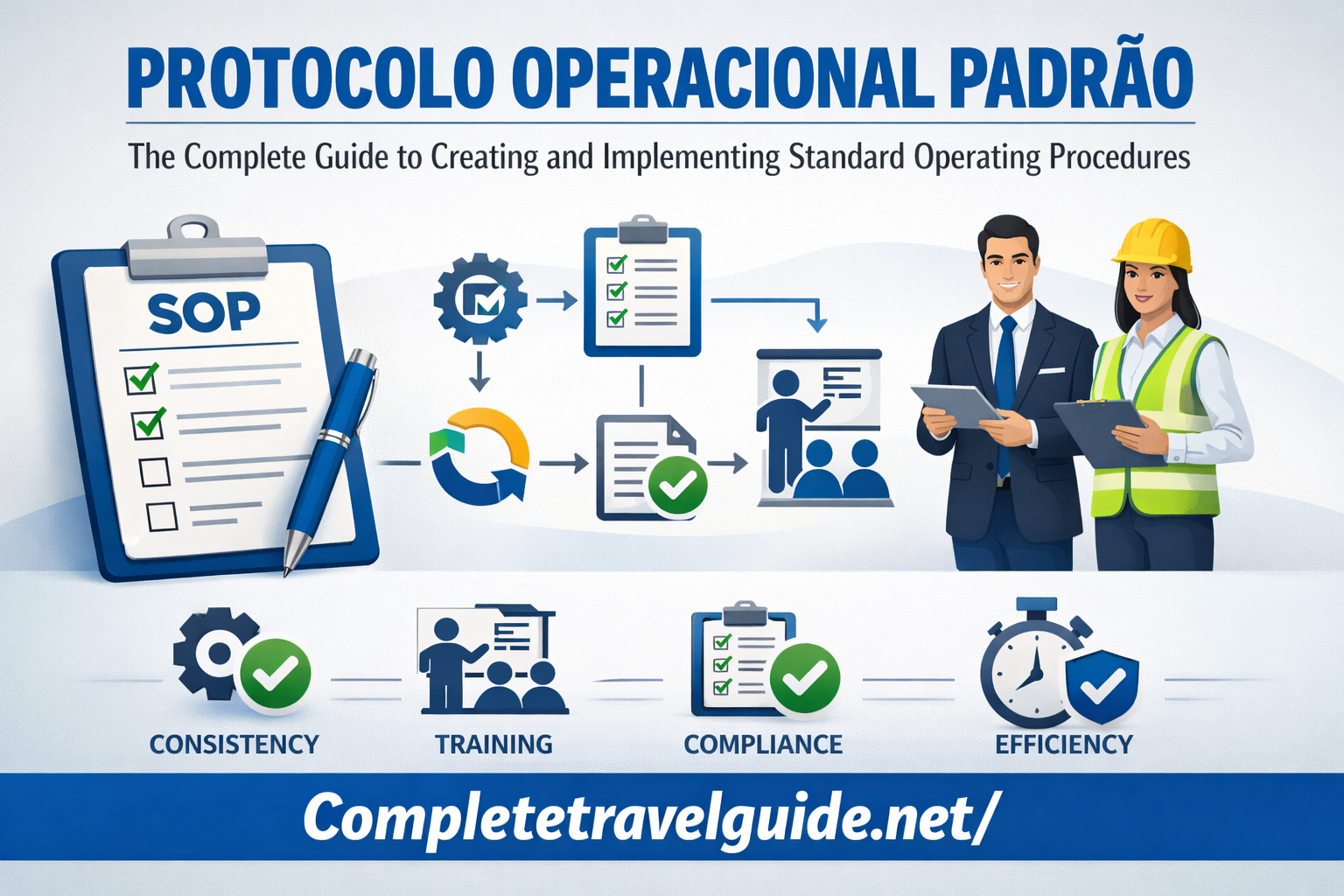
Protocolo Operacional Padrão: The Complete Guide to Creating and Implementing Standard Operating Procedures
A protocolo operacional padrão is a detailed document that describes how to perform specific tasks consistently and efficiently. It is widely used across various industries, including healthcare, manufacturing, and service operations, to ensure every team member follows the same steps. By implementing a structured POP, organizations can reduce errors, improve safety, and maintain high-quality standards.
The purpose of a protocolo operacional padrão is not only to standardize processes but also to provide clear guidance for employees at all levels. This ensures that operations run smoothly, responsibilities are clear, and tasks are completed with minimal mistakes. Organizations that adopt POPs often see improvements in efficiency, compliance, and employee performance.
Understanding Protocolo Operacional Padrão
A protocolo operacional padrão serves as a roadmap for executing tasks in a consistent manner. Unlike general process guidelines, a POP is highly specific, providing step-by-step instructions for each operation. It includes critical elements such as objectives, scope, responsibilities, materials required, and quality control measures. The structured approach helps teams maintain uniformity, no matter who performs the task.
POP is commonly used in industries where precision and safety are paramount. In healthcare, for example, a POP ensures that medical procedures follow strict protocols, minimizing the risk of errors. In manufacturing, POPs help streamline production, reduce waste, and maintain quality control. By understanding the value of a protocolo operacional padrão, organizations can foster consistency and reliability across their operations.
Benefits of Implementing a Protocolo Operacional Padrão
Implementing a protocolo operacional padrão offers multiple benefits for organizations of all sizes. One major advantage is consistency. By documenting the exact steps of a task, every employee knows precisely how to execute it, reducing mistakes and ensuring quality output. This consistency is crucial for building trust with clients, customers, and regulatory bodies.
Another key benefit of a protocolo operacional padrão is that it enhances employee training. New team members can quickly learn processes without relying solely on verbal instructions. POPs also support operational efficiency by eliminating redundant steps and identifying potential bottlenecks. Organizations that utilize POPs consistently often notice a reduction in errors, improved compliance, and measurable productivity gains.
Step-by-Step Guide to Creating a Protocolo Operacional Padrão
Creating a protocolo operacional padrão begins with identifying the processes that require standardization. Choose tasks that are critical to operations or frequently performed. Involve team members who carry out these tasks to gain insights into challenges, workflow patterns, and potential improvements. Their input ensures the POP is practical and applicable in real-world scenarios.
Next, document the procedure in clear, actionable language. Break down tasks into step-by-step instructions, including any necessary materials, equipment, or safety measures. Visual aids such as diagrams, flowcharts, and photos can enhance clarity. Once the POP is drafted, validate it by testing the procedure in real conditions, gathering feedback, and refining any unclear instructions. Proper documentation ensures the protocolo operacional padrão is usable and effective.
Implementing Your Protocolo Operacional Padrão
Once the POP is created, effective implementation is critical. Start by training employees on the new protocolo operacional padrão, explaining the importance of following the steps accurately. Integrate the POP into daily operations by making it accessible, whether in printed format or digitally. Clear communication and supervision help ensure employees follow the protocol correctly.
Monitoring adherence to the protocolo operacional padrão is equally important. Managers should regularly review processes, provide feedback, and address any deviations promptly. Utilizing digital tools or software can streamline tracking, provide reminders, and make updates easier. With proper implementation, a POP not only improves operational efficiency but also enhances workplace safety and accountability.
Maintaining and Updating a Protocolo Operacional Padrão
A protocolo operacional padrão is not a static document. As processes, equipment, or regulations change, the POP should be updated to reflect new standards. Periodic reviews, ideally quarterly or semi-annually, allow organizations to maintain relevance and effectiveness. Collect feedback from employees who use the POP to identify areas for improvement.
Version control and clear documentation of updates are essential for maintaining a functional POP. A well-maintained protocolo operacional padrão ensures ongoing compliance, consistent quality, and reduced errors. Organizations that prioritize regular updates often see sustained improvements in operational performance and employee satisfaction, as everyone understands the current expectations and procedures.
Conclusion
A protocolo operacional padrão is a fundamental tool for organizations aiming to enhance consistency, efficiency, and safety in operations. By creating, implementing, and regularly updating POPs, companies can reduce errors, streamline processes, and ensure high-quality results. Whether in healthcare, manufacturing, or service industries, adopting a well-structured POP is essential for operational success.
Organizations that embrace the protocolo operacional padrão not only improve performance but also foster a culture of accountability and continuous improvement. Starting today to document critical processes can lead to immediate benefits, from smoother training to better quality control, making the workplace more efficient and reliable.